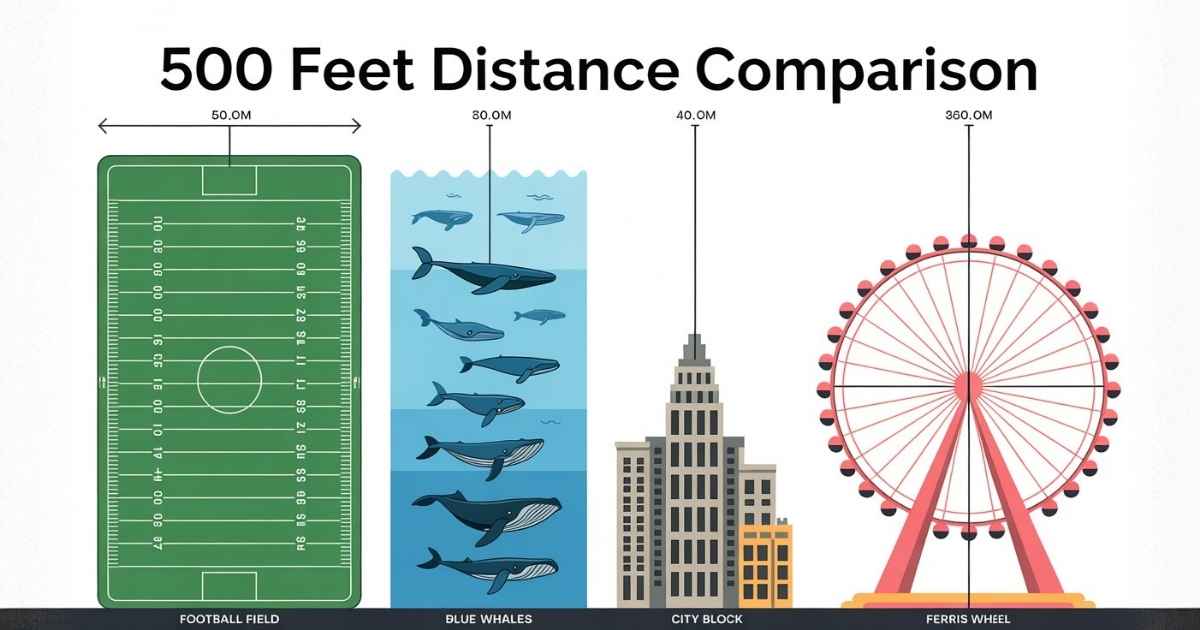
You know that moment when someone says 500 feet and your brain just goes blank? Yeah, me too. Let me break it down for you straight up.
500 feet equals about 152 meters, roughly 167 yards, or just under a tenth of a mile. Picture walking for about 90 seconds at your normal pace. That’s your 500 feet distance right there. Now here’s why this matters in real life.
Pilots need to nail this measurement when landing planes. City planners use it for building codes and safety zones. Even that new apartment you’re eyeing might have 500 feet length restrictions from the nearest highway. This isn’t just random trivia. It’s actually baked into tons of everyday situations you never think about.
Understanding the Scale of 500 Feet
How Big Is 500 Feet in Everyday Terms?
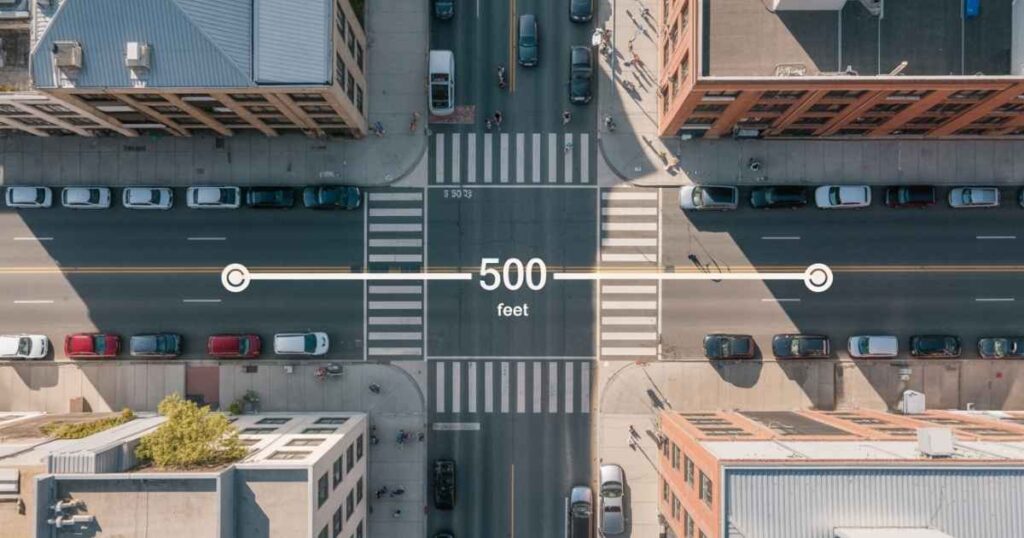
Think about your average city block. Most run between 300 to 600 feet depending on where you live. So 500 ft in real life is basically one solid city block from corner to corner. That’s the walk from your car to the office entrance in most parking lots.
Here’s another angle. A 50-story building sits at roughly this height. Not those super tall skyscrapers that make you dizzy looking up. Just your standard tall office building that dominates most downtown areas. The kind where you take the elevator and actually feel the pressure change in your ears.

Understanding 500 feet clicks when you realize it’s that sweet spot between “pretty far” and “I can still see what’s over there.” It’s not a marathon distance. But it’s definitely not a quick hop either. About five average swimming pools placed end to end if you want another mental picture.
How Long Is 500 Feet Compared to Common Objects?
Let’s talk visual comparison of 500 ft using stuff you actually know. Take five school buses lined up bumper to bumper. Each bus runs about 100 feet long. Boom, there’s your 500 ft sitting right in front of you at the school pickup line.
Or picture this. Your average semi-truck with the trailer attached measures around 75 feet total. Stack seven of those babies in a row. You’re looking at close to 525 feet. Drive on any highway and you’ve seen this comparison without even realizing it.
Length comparison examples get easier when you use animals too. An adult blue whale stretches to about 100 feet max. Line up five of these ocean giants nose to tail. That’s your 500 ft measurement swimming through the Pacific. Wild to think about, right?
Read More: How Big Is 2mm? 11 Real Examples You Can Visualize Easily
Visualizing 500 Feet Without Measuring Tools
What Does 500 Feet Look Like in Real Life?
Stand at one end of a Costco parking lot and look at the other end. That’s pretty much what 500 feet looks like in your daily routine. You can see people clearly but can’t quite make out their faces yet. Close enough to wave, too far to have a conversation without shouting.
In terms of how far is 500 feet walking, set a timer for 90 seconds and just stroll at your normal pace. Don’t speed walk like you’re late for a meeting. Just your regular comfortable stride. When that timer dings, you’ve covered it. Most people walk about 3 to 4 feet per second without rushing.
Distance visualization guide tip here. If you’re standing at sea level looking at a lighthouse, 500 feet up means you’re at the observation deck level. Not the tippy top necessarily. But high enough that cars below look like toys and you’re definitely not dropping your phone over the edge.
Why Visual Comparisons Make Length Easier to Understand
Your brain doesn’t naturally think in feet or meters. It thinks in coffee cups, parking spaces, and “how long until I’m there.” That’s why practical measurement examples using familiar stuff actually stick in your memory. Numbers alone? They bounce right off.
When I tell you 500 feet compared to football field equals about one and a half fields, your brain instantly gets it. You’ve seen a football field on TV or in person. You know that space. Now you know 500 feet without pulling out a measuring tape or doing math.
Spatial awareness measurements help with everything from estimating how far you parked to figuring out if that apartment is actually “walking distance” to the subway. Real estate agents love saying “just 500 feet away” because it sounds close. Now you’ll know if they’re stretching the truth or keeping it real.
10 Real-World Things That Measure Around 500 Feet
About 1.5 Football Fields End to End
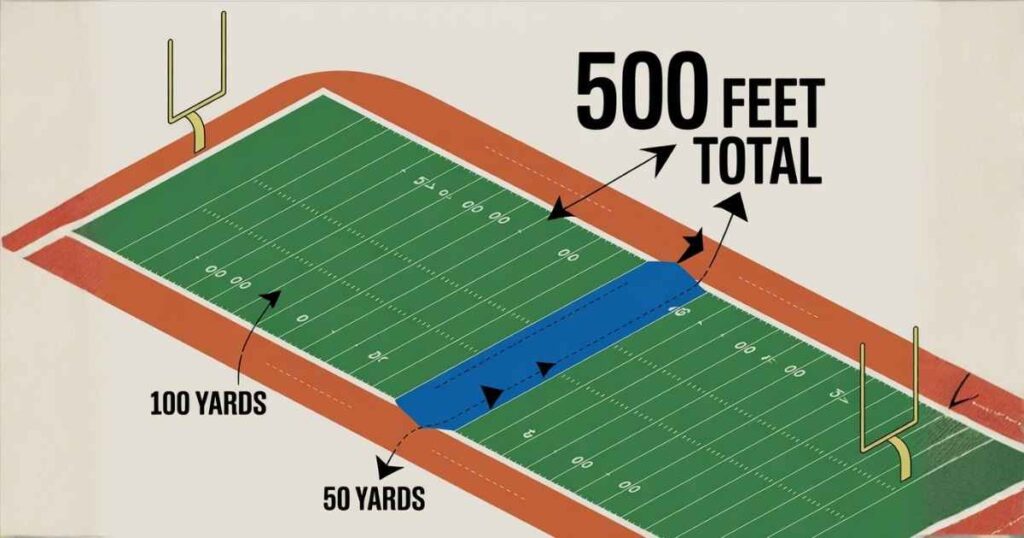
Here’s the deal with American football field dimensions. The playing field itself runs 300 feet. Add both end zones at 30 feet each. Total comes to 360 feet from goal line to goal line. So 500 ft length actually gives you one full field plus half of another one.
This means if you’re watching the game and someone punts the ball, 500 ft would take you from one 20-yard line all the way past the opposite end zone. That’s a monster kick that would have every coach losing their mind on the sidelines. Never happens in real games but makes for a solid visual.
Seattle’s Space Needle Height Comparison
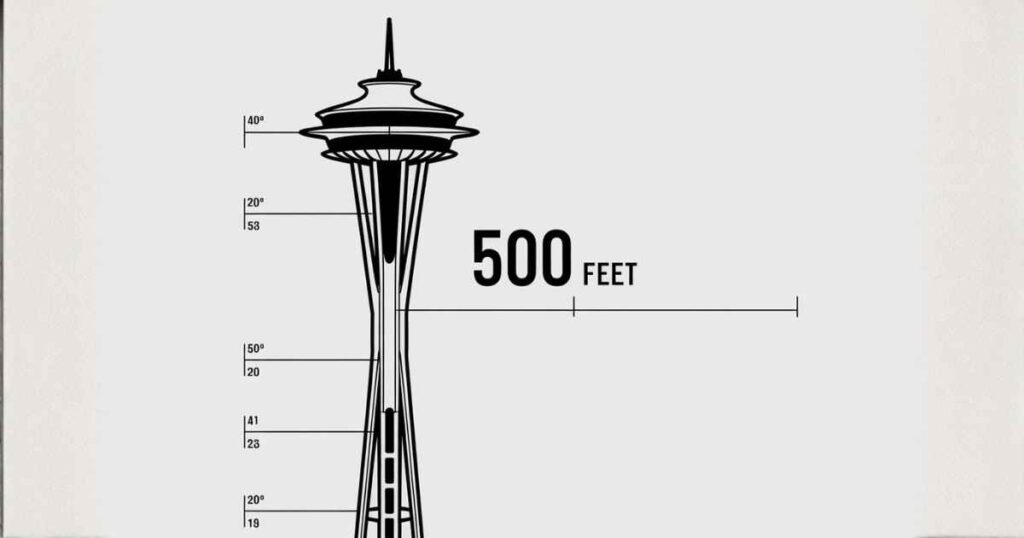
Seattle Space Needle height sits at 605 feet to the very tip of the antenna. The main observation deck where tourists crowd in for photos? That’s at 520 feet. So 500 ft puts you almost at that viewing level where you’re looking down at the entire city spread out like a map.
Built back in 1962 for the World’s Fair, this thing dominates the Seattle skyline. When you’re standing at the base looking up, 500 ft is about where the structure starts narrowing toward the top. High enough that clouds sometimes drift past at that level on foggy Pacific Northwest days.
Roughly 5 Blue Whales Lined Up
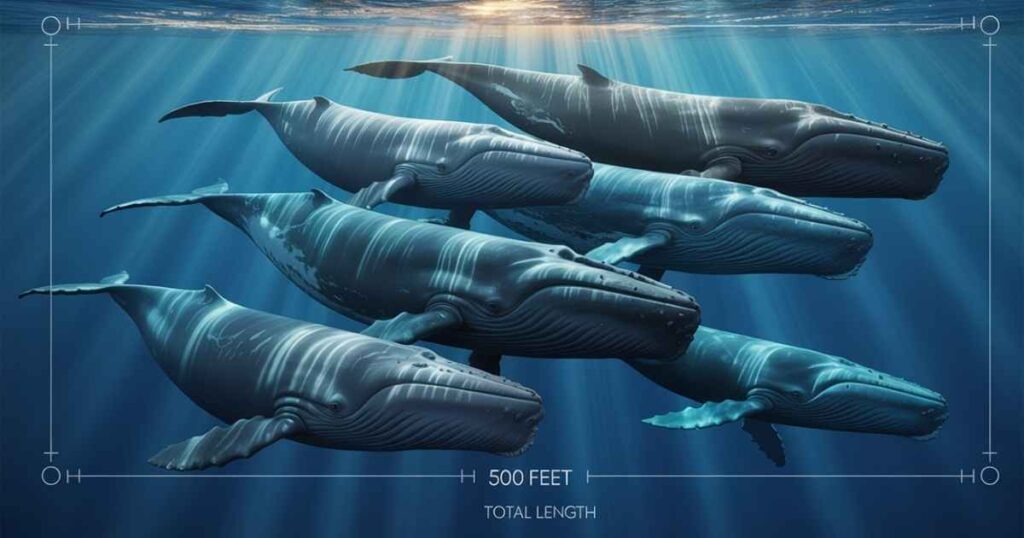
Blue whale size facts blow minds every time. These massive creatures average 80 to 90 feet long when fully grown. Some absolute units hit 100 feet. So lining up five of them gives you between 400 to 500 feet of pure ocean giant stretching across the water.
Their heart alone weighs as much as a car. Their tongue weighs as much as an elephant. When you grasp that blue whale length comparison, suddenly 500 feet feels more massive. That’s five of the largest animals ever to exist on Earth all in a row. Makes you feel pretty tiny, honestly.
Nearly 2.5 Giant Ferris Wheels

Standard carnival Ferris wheels sit around 60 to 80 feet tall. But ferris wheel height comparison gets interesting with the big boys. Giant observation wheels like you see at major amusement parks clock in around 200 feet. The London Eye? That’s 443 feet. So 500 feet equals about 2.5 of those massive carnival centerpieces.
Riding up to the top of a 200-foot wheel already feels sketchy when the wind picks up. Now imagine going 2.5 times higher. You’d see everything for miles around. Every car, every building, every person looking like ants at a picnic. That height messes with your stomach just thinking about it.
Read More: How Much Is 10 Grams? 13 Most Common Things
Sections of an Airport Runway

Airport runway sections and aviation runway segment length matter for safety. Commercial runways stretch 8,000 to 13,000 feet total for big planes. But 500 ft represents a critical chunk pilots focus on during landing. It’s about aircraft landing distance for smaller planes and emergency stopping zones.
When a plane touches down, those first 500 ft determine if the landing goes smooth or gets sketchy. Pilots calculate aviation safety distances constantly. Too short and you’re in trouble. This segment also marks where runway lights change color to guide pilots during night landings.
Massive Cruise Ships
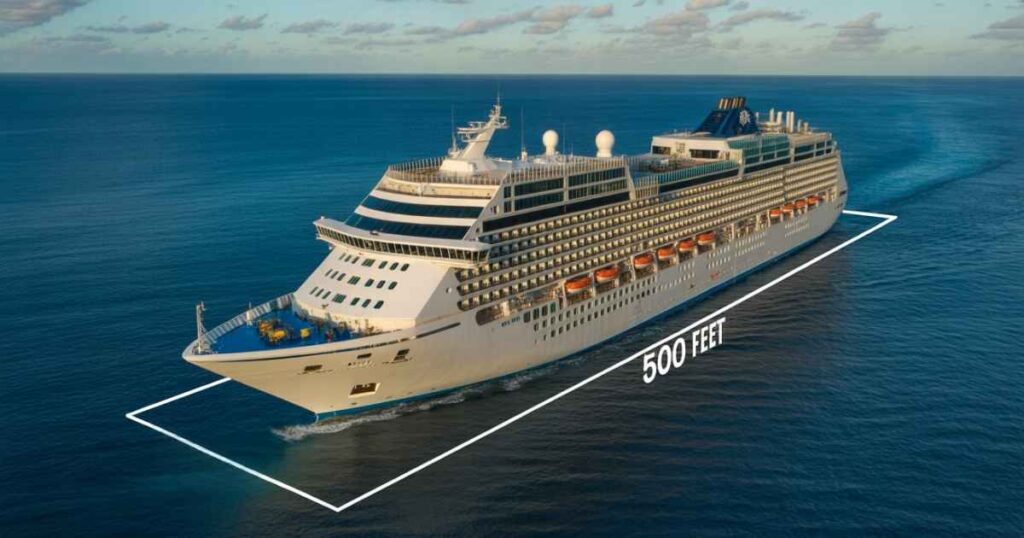
Large cruise ship dimensions vary wildly. Your average mid-size cruiser runs around 900 to 1,000 feet bow to stern. So cruise ship length comparison means 500 feet is roughly half a cruise ship. Picture everything from the front pointy bit back to the middle of the ship where all the pools and buffets cluster.
These floating hotels carry thousands of people at once. When you stand at one end looking down the deck, 500 feet is that point where people start looking small but you can still recognize faces. About six or seven decks stacked up too. Basically a moving apartment building slicing through the ocean.
Industrial Oil Tankers
Oil tanker size and oil tanker length range depends on cargo capacity. Smaller coastal tankers start around 500 feet. Medium-range tankers push 600 to 750 feet. Supertankers? Those beasts stretch over 1,200 feet and carry millions of gallons of crude oil across oceans.
A 500-foot tanker hauls serious cargo but can still navigate smaller ports and coastal waters. These workhorses move the oil that becomes your gasoline, heating oil, and plastics. Not glamorous but absolutely essential. When you pump gas, there’s a decent chance it rode on one of these.
Large Shipping Docks

Commercial dock size at major ports typically ranges from 500 to 1,000 feet per berth. That dock length measurement accommodates container ships, tankers, and cargo vessels simultaneously loading and unloading. Cranes tower overhead moving those colorful shipping containers you see stacked everywhere.
Standing on a 500-foot dock feels massive. Concrete stretches in both directions. Forklifts zip around. Ships tied up alongside make you realize how tiny humans are compared to maritime infrastructure size. These docks run 24/7 keeping global trade flowing. Everything from your phone to your sneakers probably crossed one of these.
Seagoing Barges
Seagoing barge dimensions usually hit 300 to 500 ft for ocean-going versions. River barges run smaller. These flat-bottomed workhorses haul bulk cargo like coal, grain, gravel, and construction materials. One barge replaces about 70 semi-trucks worth of cargo. Way more efficient and cheaper than road transport.
They look boring compared to fancy cruise ships. But barges move the stuff that builds cities and powers plants. A 500-foot barge loaded with coal or iron ore sits so low in the water you wonder how it doesn’t just sink. Yet these things cross rough seas hauling millions of pounds like it’s nothing.
Long Coastal Piers
Coastal piers extending 500 ft into the water serve multiple purposes. Fishing piers let you cast into deeper water where bigger fish hang out. Pier length example at this distance gets you past the shallow breaking waves into calmer, deeper zones. Commercial piers at this length handle ferries and small cargo boats.
Walking to the end of a 500-foot pier gives you that weird feeling of being surrounded by water but still on solid ground. Waves crash on both sides. Seabirds circle overhead. You can see the beach behind you getting smaller. It’s that perfect spot where ocean meets land in a way that feels both peaceful and slightly unnerving.
How 500 Feet Connects to Daily Life
Ever wonder about safety distance regulations around construction sites? That 500-foot perimeter isn’t random. It protects people from falling debris, noise, and hazards. Urban planning measurements use this distance for building setbacks from highways and industrial zones too.
Construction distance standards get serious at this range. Power lines, gas stations, schools—all have 500-foot buffer zones written into building codes. When your realtor says a property is “far enough” from something undesirable, they’re often talking about hitting this magic number. Smart buyers verify instead of just trusting the sales pitch.
Navigation distance reference matters if you’re into boating or flying drones. Most recreational drones must stay within 500 ft of the operator. Boats need to maintain certain distances from swimmers and divers. These aren’t suggestions. Break those rules and you’re looking at fines or worse. Better to know the distance by feel before you need it urgently.
FAQs
How Many Miles is 500 Feet?
500 feet equals approximately 0.095 miles, which is just under one-tenth of a mile in total distance measurement.
How Far is 500 Feet?
500 feet is about one and a half football fields or roughly one city block in most urban areas.
How Far is 500 Feet Visually?
Visually, 500 feet is the distance where you can see people clearly but cannot make out their facial features distinctly.
How Far is 500 Feet to Walk?
Walking 500 feet takes about 90 seconds at a normal comfortable pace, roughly three average feet per second walking speed.
Final Thoughts on Measuring 500 Feet
Look, how to imagine 500 feet boils down to picking references that click for you personally. Maybe you’re a sports fan—think football fields. Beach person? Picture that pier you walked last summer. City dweller? Count your city blocks. Make it personal and it sticks.
Is 500 feet tall depends on context. For a building? That’s definitely tall but not record-breaking. For a tree? That would be absolutely insane and impossible. For a dive into water? You’re not surviving that fall. Same measurement, completely different meaning based on what we’re measuring. Context always matters.
How long is 500 feet visually changes with weather too. Clear day? You see every detail at that distance. Foggy morning? Good luck seeing 50 feet ahead. Rain? Forget it. Your perception of distance shifts constantly. That’s why pilots and sailors train so hard on distance estimation under every condition imaginable.
Next time someone drops a measurement on you, don’t just let it slide past. Connect it to something real. Turn abstract numbers into concrete images. Your brain will thank you. And you’ll actually remember it when you need to estimate if that parking spot is really “just 500 feet” from the entrance like the sign promised.