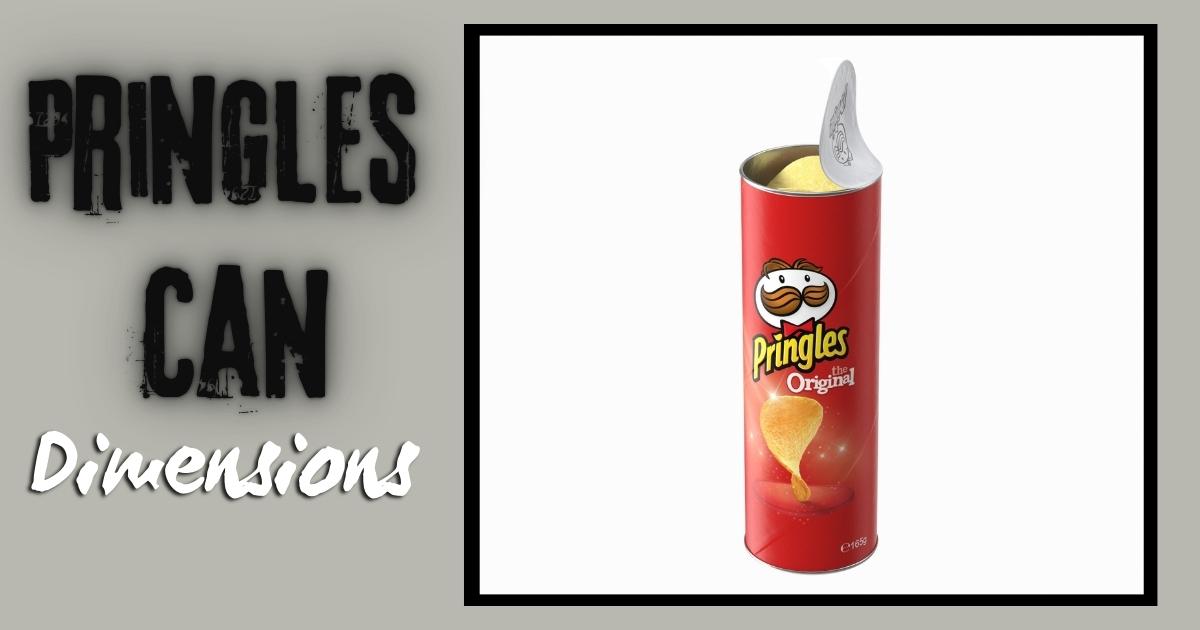
That tall tube sitting on your pantry shelf isn’t just another snack container. The Pringles can dimensions were engineered with precision. Every inch serves a purpose, from protecting chips to maximizing shelf space. This iconic cylindrical design changed snacking forever.
Let’s dive into the measurements, science, and surprising facts behind this packaging marvel that revolutionized how Americans enjoy their favorite stackable chips.
1. Introduction
You’ve grabbed a Pringles can countless times. But did you ever stop to wonder why it feels just right? The answer lies in careful engineering and innovative packaging design. Unlike flimsy chip bags that leave you digging through crumbs, this sturdy tube keeps every chip intact.
The tall can stands proud on store shelves. You spot it instantly among competing snacks. That’s no accident. The dimensions create perfect brand identity while solving practical problems. Freshness lasts longer. Storage becomes easier. Chips don’t crumble into disappointing dust.
Americans consume millions of these cans yearly. Each one follows the same precise measurements. This consistency builds trust. You know exactly what you’re getting every single time. That’s the power of smart packaging innovation meeting consumer needs.
2. Standard Pringles Can Measurements
Let’s talk numbers. These measurements matter more than you think.
Height, Diameter, and Volume
A standard Pringles can stands 10 inches tall. That’s roughly the length of a dollar bill. The diameter measures about 3 inches across. Think of a tennis ball’s width. These dimensions create the perfect container shape for chip stacking.
The volume holds approximately 5.96 ounces of chips. No air fluff here. You’re getting actual product. Mini cans offer 1.3 ounces for quick snacking. Party sizes pack 7 ounces or more for group gatherings.
Key Measurements:
- Standard height: 10 inches (25.4 cm)
- Standard diameter: 3 inches (7.6 cm)
- Standard weight: 5.96 oz (169 grams)
- Mini size: 1.3 oz (37 grams)
- Party size: 7+ oz (200+ grams)
These numbers ensure efficient storage everywhere. Your cupboard loves the slim profile. Store shelves maximize space. Car cup holders accept them perfectly. The cylindrical container fits modern American lifestyles.
Weight and Capacity
Empty cans weigh almost nothing. The composite materials keep things light. But fill one up? You’re holding nearly 6 ounces of deliciousness. Heavier flavors like cheese or BBQ add slightly more weight. Extra seasonings and coatings make the difference.
Traditional chip bags confuse customers with air. Pringles eliminates that frustration. The snack container delivers consistent portion control. No surprises. No disappointment. Just predictable satisfaction every time.
This approach supports consumer portioning goals. Americans watching their intake appreciate knowing exact amounts. The can structure makes measuring easy. You can track servings without guesswork. That builds loyalty and repeat purchases.
3. Evolution of the Pringles Can Design
Every innovation has a backstory worth telling.
Origins and Patent
Fred Baur created something special in the 1960s. He worked as a chemist and food storage expert. Broken chips frustrated him. Air-filled bags wasted space. He wanted better solutions for snack lovers everywhere.
His breakthrough came through mathematical thinking. The cylindrical design protected chips perfectly. Stacking them prevented movement and breakage. In 1970, he patented this revolutionary packaging solution. Fun fact: Baur loved his invention so much, his ashes rest in a Pringles can. Talk about dedication!
This design evolution set new industry standards. Other companies noticed. They tried copying the concept. But Pringles maintained its edge through consistent quality and consumer recognition.
Material Changes Over the Years
Early versions used metal and thick foil. They worked but weren’t perfect. Recycling proved difficult. Production costs ran high. Manufacturers needed smarter approaches.
The shift to composite materials changed everything. Modern cans blend cardboard, thin plastic, and aluminum. This combination delivers strength without excessive weight. Shipping costs dropped. Products stayed protected. Companies saved money while maintaining quality.
However, recyclability improvement became challenging. Mixed materials don’t separate easily. Many recycling facilities reject these cans. This environmental concern drives ongoing material innovation efforts. Pringles continues exploring sustainable materials for future versions.
Impact of Branding & Marketing on Design Choices
The tall tube became a marketing tactic goldmine. It stands out dramatically on crowded shelves. Competitors use flat bags. Pringles towers above them literally. Your eyes find it instantly.
The resealable lid encourages repeat snacking. You don’t finish the whole can immediately. That closure mechanism preserves freshness between sessions. Smart branding strategy meets practical functionality perfectly.
Limited editions boost sales through collector appeal. Special colors attract attention. Holiday designs create urgency. These promotional strategy moves keep the brand fresh. Yet the core dimensions remain unchanged. That consistency reinforces brand identity across generations.
4. Why the Pringles Can Dimensions Matter
Size impacts your snacking experience significantly.
Chip Protection & Shelf Life
Rigid walls prevent crushing during shipping. Chips stack without sliding around. Less movement means fewer broken pieces. The can structure acts like protective armor. Your chips arrive intact and ready.
The airtight seal extends freshness preservation dramatically. Traditional bags lose their crunch quickly. Air seeps through weak closures. Pringles maintains crispness for weeks. That resealable container technology makes all the difference.
Quality stays consistent from factory to your couch. No stale disappointments. No bag-bottom crumbs. Just perfect chips every time. This reliability builds customer trust and repeat purchases.
Portability and Storage Efficiency
Car cup holders accept Pringles cans perfectly. Backpacks accommodate them without crushing. Kitchen cabinets love their slim profiles. The cylindrical packaging fits everywhere Americans go.
Retailers appreciate the stackable design tremendously. Store shelves maximize product display. Space-saving design allows more inventory. Warehouses store them efficiently. Everyone benefits from these thoughtful dimensions.
Storage Benefits:
- Fits standard cup holders
- Stands upright in cabinets
- Slides into bags easily
- Stacks neatly on shelves
- Travels without crushing
- Takes minimal space
This organized stacking helps both businesses and consumers. You grab your favorite flavor quickly. Stores restock efficiently. The storage optimization creates win-win situations throughout the supply chain.
Brand Recognition & Unique Packaging Appeal
You recognize that tube from across the store. The tall can became iconic in American culture. Movies feature it. Memes celebrate it. Pop culture embraced this unique packaging wholeheartedly.
Other brands attempted similar designs. None achieved the same success. Pringles owns this packaging structure in consumer minds. That instant consumer recognition drives sales without additional advertising.
The dimensions contribute to perceived premium quality. Flimsy bags suggest cheap products. Sturdy tubes imply better value. This psychological connection supports higher pricing. Smart branding techniques leverage physical design brilliantly.
5. The Science Behind the Pringles Can Shape
Math meets snacking in unexpected ways.
Hyperbolic Paraboloid & Stacking Efficiency
Each chip curves like a horse saddle. That’s called a hyperbolic paraboloid shape. Sounds complicated? It’s actually brilliant engineering. The curved form distributes weight evenly across the surface.
This mathematical shape prevents pressure points. Flat chips break easily under weight. Curved chips support each other. The geometric design creates natural stacking efficiency. They nest together perfectly inside the tube packaging.
This chip structure isn’t just for looks. It serves critical protective functions. Engineers tested countless variations. This particular paraboloid shape won through superior performance. Science creates better snacking experiences.
Cylindrical Packaging vs. Traditional Chip Bags
Chip bags use air for cushioning. That air takes up valuable space. Pringles uses structure instead. The round design provides strength without waste.
Comparison Table:
| Feature | Pringles Can | Traditional Bag |
| Protection | Rigid walls | Air cushioning |
| Space efficiency | High | Low |
| Freshness seal | Resealable lid | One-time closure |
| Stackability | Excellent | Poor |
| Breakage rate | Minimal | High |
| Storage convenience | Easy | Awkward |
The cylindrical container handles shipping stress better. It doesn’t tear or puncture easily. Bags rip from sharp objects. Cans endure rougher treatment. This durability reduces waste and customer complaints significantly.
6. Real-World Applications of Pringles Cans
Empty cans become useful tools surprisingly often.
STEM Education & Engineering Projects
Teachers love using these for classroom experiments. The container shape demonstrates physics principles. Students test structural strength. They explore acoustic properties. Educational projects become hands-on and fun.
Universities use them for prototype testing. Engineering students build speaker amplifiers. Science classes create periscopes. These student experiments teach real-world applications. The affordable educational tools make learning accessible.
STEM Applications:
- Physics demonstrations
- Acoustic experiments
- Structural testing
- Prototype development
- Geometry lessons
- Material science studies
Professional & Household Storage
Dry spaghetti fits perfectly inside. Pens and pencils organize neatly. Knitting needles store safely. The airtight seal keeps contents fresh. This packaging structure serves multiple purposes beyond chips.
Garages benefit from screw storage. Craft rooms organize supplies. Kitchens hold utensils. The durability outlasts cheap plastic containers. Americans find endless uses for these versatile tubes.
Creative Upcycling & DIY Projects
Pinterest overflows with creative ideas. Gift containers look stunning. Custom coin banks teach savings. Desk organizers declutter workspaces. The cylindrical design inspires artistic projects.
Kids build periscopes for backyard adventures. Crafters create decorative holders. The possibilities seem endless. This reusability extends the product’s life. Environmental adaptation happens through consumer creativity.
Environmental Innovation & Recycling Challenges
Mixed materials create recycling challenges currently. Cardboard, plastic, and aluminum don’t separate easily. Many facilities can’t process them. This limitation concerns environmentally conscious consumers.
Pringles acknowledges these issues. They’re developing eco-friendly initiatives actively. Research focuses on fully recyclable alternatives. Sustainability efforts aim for green packaging solutions. Future versions promise improved environmental adaptation without sacrificing quality.
7. Global Market Variations in Pringles Can Dimensions
Not all cans match American sizing.
Regional Size Differences
European cans measure slightly shorter at 9.5 inches. Regional differences reflect packaging regulations. Asian markets prefer mini versions. Australian editions sometimes run larger. These international sizes serve diverse needs.
Global Size Comparison:
- USA: 10 inches standard
- Europe: 9.5 inches typical
- Asia: Mini cans popular
- Australia: Variable sizes
- Latin America: Standard sizing
These market adaptations help Pringles compete globally. Local preferences influence dimensions. Regulations require adjustments. The company balances consistency with cultural adaptation successfully.
Cultural Preferences & Portion Sizing
Japanese consumers favor smaller portions. American families buy larger sizes. European markets land somewhere between. These global preferences shape product offerings.
Portion sizing reflects cultural eating habits. Americans often snack generously. Asian cultures emphasize moderation. Pringles respects these differences. Snack measurement varies to match expectations. This flexibility supports worldwide success.
8. Industrial & Engineering Insights on the Pringles Can
Manufacturing requires serious technical expertise.
Structural Analysis
Composite materials provide optimal strength-to-weight ratios. Cardboard offers rigidity. Aluminum adds moisture protection. Plastic creates seals. Together, they form superior packaging.
The round design distributes pressure uniformly. Rectangular containers have weak corners. Circles eliminate those vulnerabilities. This engineering choice ensures durability throughout shipping and handling.
Advanced Manufacturing Techniques Used in Production
Precision machinery laminates layers perfectly. Aluminum lining gets applied at exact thickness. Cutting equipment maintains consistent dimensions. The resealable lid attaches with reliable seals.
Quality checks happen at multiple stages. Machines test seal integrity. Inspectors verify measurements. This attention to detail maintains standards. Every can meets specifications before leaving the factory.
9. The Future of Pringles Packaging
Innovation continues driving improvements forward.
Sustainability Goals for 2025 and Beyond
The company targets 100% recyclable cans. Reducing plastic in lid design ranks high priority. Biodegradable alternatives undergo testing. These sustainability efforts address consumer concerns directly.
Easier-to-separate layers are in development. Material innovation focuses on environmental responsibility. The goal balances green packaging with product protection. Maintaining quality while going greener challenges engineers.
Predictions for Material and Design Innovations
Edible packaging might become reality eventually. Collapsible designs could save shipping space. Smart packaging with freshness indicators seems likely. Packaging advancement never stops.
Thinner yet stronger materials are possible. Digital integration through QR codes expands. Augmented reality experiences could emerge. Pringles continues leading design evolution in snacking.
10. Case Study: How Pringles Revolutionized Snack Packaging
Let’s examine the complete transformation story.
Problem: Challenges of Traditional Chip Bags
Before Pringles, disappointment came standard. Bags allowed excessive breakage. Air filling wasted space inefficiently. Freshness disappeared rapidly after opening. Customers found inconsistent portions frustrating.
Storage proved messy and awkward. Bags tipped over easily. Chips spilled everywhere. The industry desperately needed better solutions. Consumer complaints grew louder yearly.
Solution: Development of a Resealable, Protective Can
Baur introduced rigid cylindrical packaging brilliantly. The stackable design prevented chip movement completely. The resealable lid maintained freshness longer. Uniform dimensions ensured quality control.
This revolutionary approach to containers changed everything. The packaging solution addressed every major complaint. Customers received intact chips consistently. The airtight seal technology exceeded expectations dramatically.
Implementation: Changes in Materials Over Time
Initial metal construction worked acceptably. Evolution to composite materials improved efficiency. Manufacturers balanced cost with functionality. Lighter weight reduced shipping expenses. Material adaptation addressed practical concerns gradually.
Continuous improvement remains ongoing today. Each generation refines previous versions. Sustainable materials research intensifies yearly. The commitment to excellence persists.
Results: Long-Lasting Impact on the Snack Industry
Other brands attempted similar designs afterward. Resealable containers became industry norms. Consumer expectations changed permanently. Pringles maintained market leadership positions.
The packaging innovation influenced multiple industries beyond snacks. Coffee, candy, and other products adopted similar approaches. This case study teaches valuable lessons. Smart design creates lasting competitive advantages.
Conclusion
The Pringles can dimensions measure 10 inches tall and 3 inches wide for good reasons. Every measurement serves functional and marketing purposes beautifully. This cylindrical design protects chips while maximizing storage optimization. Science and engineering created genuinely iconic innovative packaging.
Future sustainability efforts focus on environmental responsibility. These dimensions revolutionized snack packaging forever, proving that smart design changes industries. Next time you grab that familiar tube, you’ll appreciate the engineering marvel in your hands.