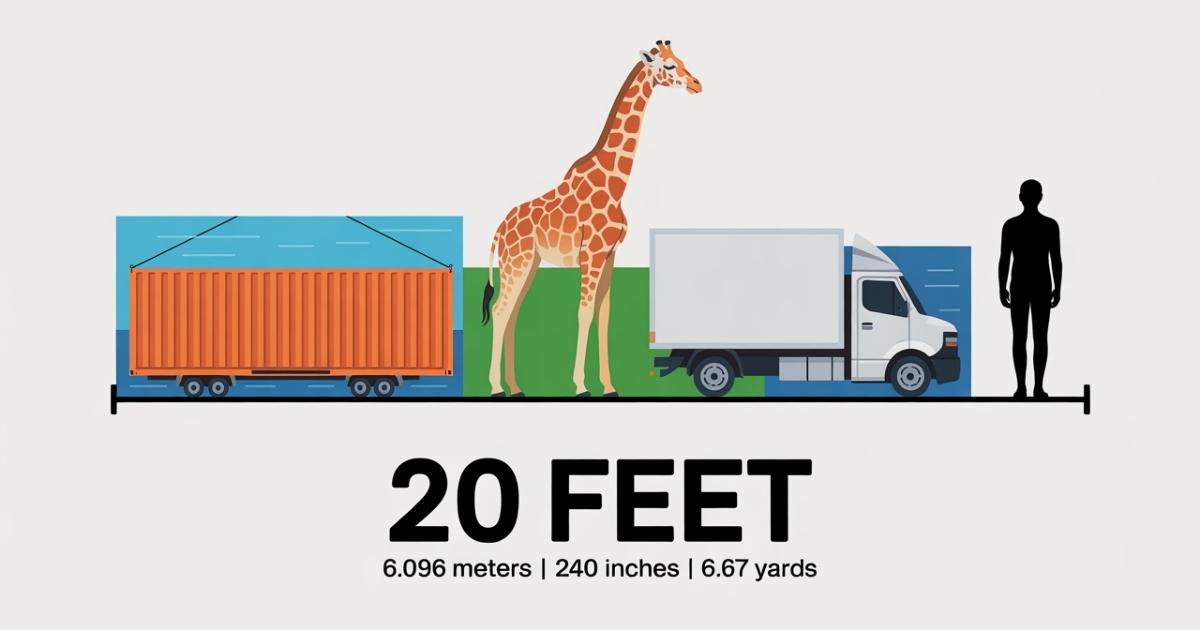
Ever wondered how long is 20 feet when someone mentions it? Whether you’re planning a deck, renting a truck, or just curious about 20-foot dimensions, abstract measurements feel impossible to picture.
That’s why we’re breaking down this distance using real-life 20-foot comparisons you see every day. By the end, you’ll instantly recognize twenty feet long wherever you go. Let’s turn confusing numbers into crystal-clear mental images you can actually use.
How Long Is 20 Feet Visually?
Understanding 20 feet in real life starts with breaking down the numbers. Twenty feet equals 6.096 meters, 240 inches, 609.6 centimeters, or about 6.67 yards. That might sound technical, but here’s what it means for you.
Picture taking eight normal walking strides. Each adult step covers roughly 2.5 feet, so 20 feet is just eight paces from your front door. Most master bedrooms measure 12-16 feet long, which means 20 feet extends beyond your typical bedroom by several feet.
Here’s another angle: a standard two-story house stands about 20-25 feet tall. So if you’re looking up at your neighbor’s roofline, you’re seeing approximately 20-foot distance from ground to gutter.
What does 20 feet look like in modern context? Many tiny homes measure exactly 8 feet wide by 20 feet long. That’s the entire living space, including kitchen, bathroom, and sleeping area. Contractors and DIYers need this visual reference for 20 ft constantly—for deck builds, fence installations, and driveway planning.
Think about basketball court width too. A full court spans 50 feet wide, so 20 feet represents roughly 40% of that width. Or consider standard door frame height at about 7 feet. Stack nearly three doorways vertically and you’ve reached 20 feet.
What Does 20 Feet Look Like?
Our brains struggle with estimating distance visually beyond arm’s reach. Let’s fix that with human-scale comparisons.
How big is 20 feet in relation to people? Take an average person standing 5.5-6 feet tall. Lay 3.5 people head-to-toe and you’ve got your measurement. Or picture four adults standing with arms stretched wide, fingertip to fingertip.
For drivers, one parking space measures 18-20 feet long. When you pull into a spot at the grocery store, that’s your reference point right there. The parking space length became standardized precisely because it fits most vehicles comfortably.
During recent years, six feet became our baseline for social distancing. Twenty feet is just over three times that distance. It’s the gap you’d maintain from someone across a small room.
Here’s a measurement guide 20 ft many people miss: a Tesla Model Y (increasingly common in American driveways) measures about 16 feet. Add a typical shopping cart at 3-4 feet, and you’ve visualized the full span.
Want to make it physical? Walk outside and pace it out in your driveway. Count eight normal steps. Notice what sits at that distance—maybe your mailbox, a street lamp, or your neighbor’s property line. That’s understanding 20-foot space through direct experience.
Modern laser measuring tools and AR phone apps like MeasureKit now let you project measurements in real-time. Point your phone camera and “see” exactly where 20 feet ends in your actual environment.
9 Common Things That Are 20 Feet Long
These aren’t obscure references. They’re objects that are 20 feet long that Americans encounter constantly. Each one gives you instant spatial calibration.
Normal Shipping Container
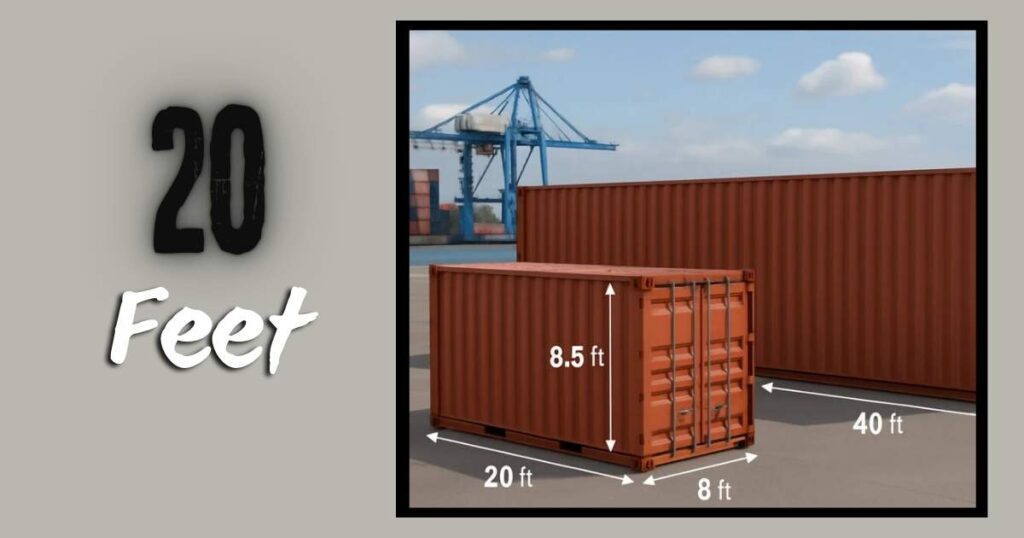
Shipping container size revolutionized global trade and modern architecture. A standard 20-foot container (called a TEU in logistics) measures precisely 20 feet long, 8 feet wide, and 8.6 feet high.
You’ll spot these on highways, rail yards, and increasingly as pop-up retail spaces. By 2025, shipping container storage capacity applications exploded—tiny homes, backyard offices, coffee shops, even multi-story apartments. The Container Home Hub reports 30% growth in residential container projects from 2022-2024.
These weigh about 5,000 pounds empty but carry up to 62,000 pounds of cargo. The intermodal system standardized this 20-foot shipping container dimensions back in the 1950s under ISO 668 regulations. Park two side-by-side and you’ve created a 40-foot living space equivalent to many studio apartments.
Giraffe

Adult male giraffes reach 18-20 feet tall, making them Earth’s tallest land mammals. Females typically max out around 16 feet, while males push that upper range.
According to the Giraffe Conservation Foundation’s 2024 census, only about 117,000 giraffes remain worldwide. Many US zoos now feature elevated platforms where visitors stand at eye level with these giants—roughly 15-18 feet up.
Here’s perspective: a giraffe’s neck alone stretches 6-7 feet, taller than most humans. If your home has standard 8-10 foot ceilings, a giraffe couldn’t fit inside. You’d need a two-story foyer with 20-foot ceilings minimum. Their hearts weigh 25 pounds and generate double human blood pressure to pump blood up that incredible neck.
Delivery Box Truck
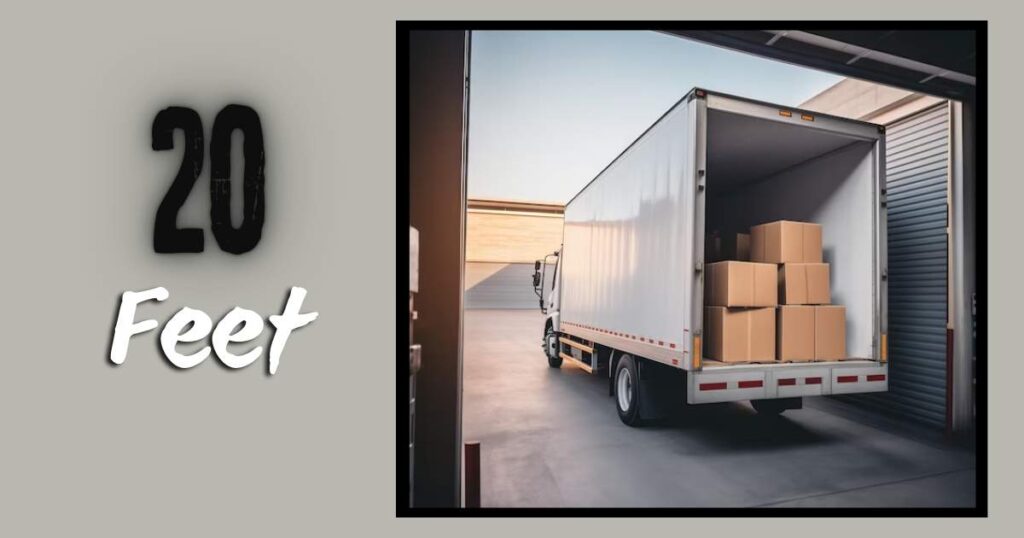
Standard box trucks range 16-26 feet, but 20-footers hit the sweet spot for small businesses and home movers. Common models include the Isuzu NPR, Ford F-650, and Freightliner M2 106.
Amazon, FedEx Ground, and local furniture stores deploy these daily. A delivery box truck length of 20 feet provides roughly 1,000-1,200 cubic feet of cargo space—enough for a 2-3 bedroom apartment move.
Most states let you drive these on a standard Class C license if under 26,000 pounds GVWR. No CDL required. Rental costs run $60-150 per day depending on location and season (2025 rates).
By 2025, companies like Motiv Power Systems manufacture electric 20-foot box trucks. Cities including Los Angeles and New York now incentivize these with preferential loading zones.
Extension Ladder
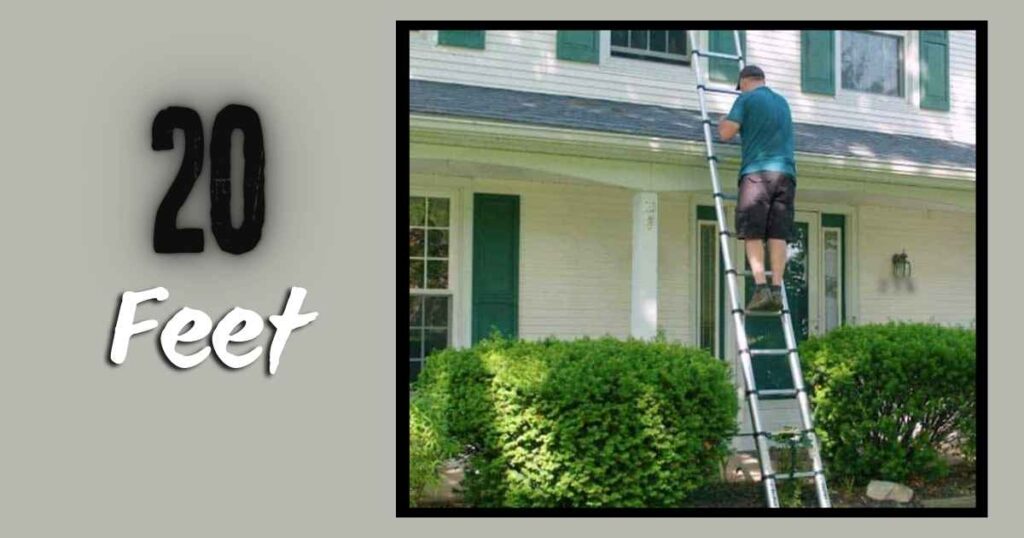
Extension ladders at 20 feet dominate residential use. They extend to roughly 20 feet but collapse to 11-12 feet for garage storage.
Working height reaches approximately 23-24 feet when accounting for the proper 75.5-degree setup angle. That’s perfect for two-story homes averaging 20-25 feet, gutter cleaning, or exterior painting.
Popular 2025 models include:
- Werner D6220-2 (fiberglass, Type IA, 300 lb capacity) at $280-350
- Louisville FE3220 (fiberglass, 225 lb capacity) at $220-280
- Little Giant Revolution (convertible, extends 22 feet) at $450-550
OSHA requires three-point contact and extension three feet beyond rooflines. A 20-foot ladder represents the minimum for safely accessing most two-story roofs. Fiberglass now dominates the market due to non-conductivity around power lines.
Read More: How Big Is 2mm? 11 Real Examples You Can Visualize Easily
Flagpole
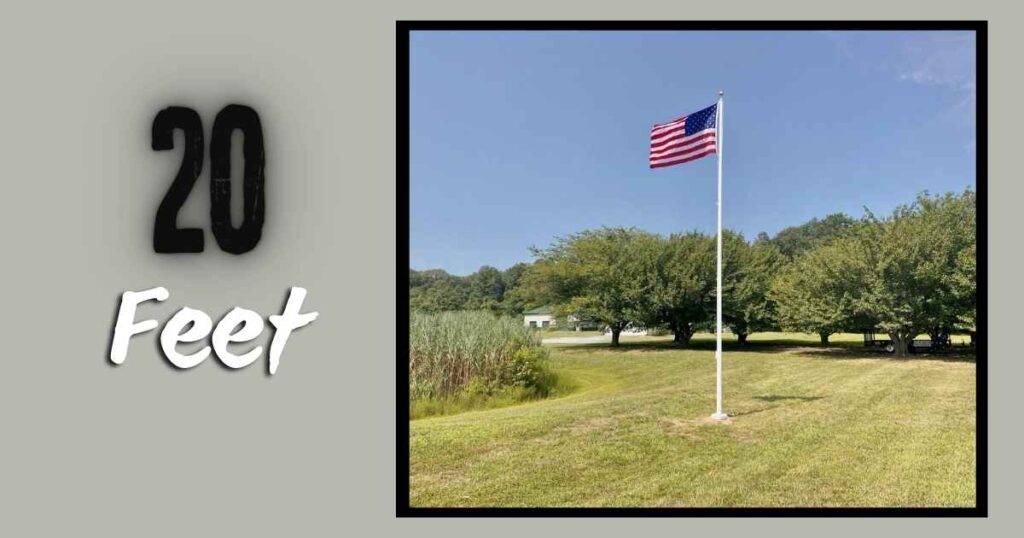
Twenty-foot flagpoles are the most common size for American homes and small businesses. They pair perfectly with a 3×5 or 4×6 foot US flag following residential flagpole standards.
Materials include aluminum (most popular at $150-400), fiberglass (coastal flexibility at $200-500), and telescoping models ($180-450). Installation typically requires 2-3 feet buried underground, so total pole length actually reaches 22-23 feet.
In 50 mph winds, a 20-foot flagpole experiences roughly 150 pounds of force. Engineering matters. The Freedom to Display the American Flag Act of 2005 protects reasonable residential displays, and 20 feet typically qualifies under most municipal codes.
US Flag Code suggests illumination for 24/7 display. Solar flagpole lights became standard by 2025, eliminating electrical wiring needs.
Pontoon Boat (Small)
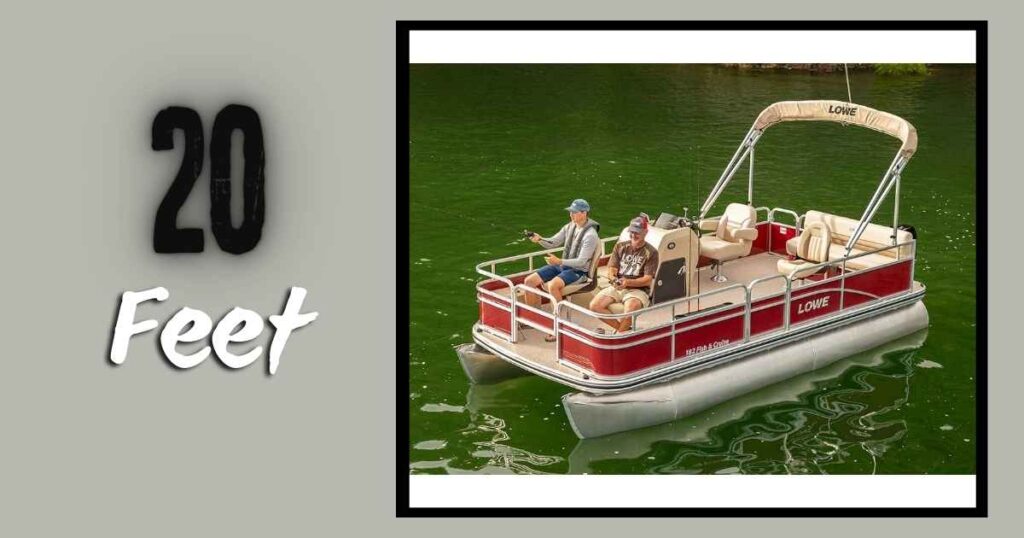
Pontoon boats span 16-30+ feet, but small pontoon boat length at 20 feet dominates entry-level markets. These measure 20 feet long by 8-8.5 feet wide—proportions nearly identical to shipping containers.
Capacity reaches 8-10 passengers with weight limits around 1,800-2,200 pounds. Popular 2025 models include:
- Bennington 20 SLM (luxury entry) at $38,000-48,000
- Sun Tracker Party Barge 20 DLX (budget-friendly) at $28,000-35,000
- Manitou 20 Oasis (performance-oriented) at $42,000-52,000
Most use 50-90 HP outboards. They remain towable by half-ton trucks (F-150, Silverado 1500) without special licensing in most states. By 2025, electric pontoon options emerged from brands like Vision Marine, though pricing stays premium.
Bowling Lane Approach Area
The bowling approach distance where you walk before releasing the ball measures precisely 15 feet. Include the foul line buffer and typical seating setup, and the bowler’s zone extends to 18-20 feet.
Bowling lane length from foul line to pins spans 60 feet, plus the 15-foot approach equals 75 feet total. Over 67 million Americans bowled in 2023, according to the Bowling Proprietors’ Association, making this a near-universal reference.
The USBC (United States Bowling Congress) strictly regulates approach dimensions. Basketball hoop height at 10 feet offers another angle—the approach is 1.5 times that vertical measurement laid horizontally.
Boutique alleys like Punch Bowl Social and Bowlero modernized venues with LED lighting, but traditional 15-foot approaches remain standard across 3,500+ bowling centers nationwide as of 2025.
Medium Billboard Sign

Billboards vary widely, but a common medium billboard size measures 20 feet wide by 10 feet high (200 square feet total). The industry calls these “junior posters” or “small bulletins.”
This width provides impactful messaging visible from highways while fitting urban locations where space is tight. Legible from roughly 500-800 feet at highway speeds depending on font and design.
The Outdoor Advertising Association of America reports that by 2025, 40% of roadside ads use LED screens. Digital billboards rotate messages every 6-8 seconds through programmatic buying. Solar-powered digital versions became standard in California, Colorado, and Northeast markets.
Renting a 20-foot billboard height format in mid-sized markets costs $1,500-4,000 monthly (2025 rates). Rural areas drop to $500-1,200 monthly. Traditional vinyl on steel frames withstands 90+ mph winds.
Read More: How Much Is 3 Ounces? 13 Most Common Things That Weigh 3 Ounces
Parking Lot: 2 Car Lengths
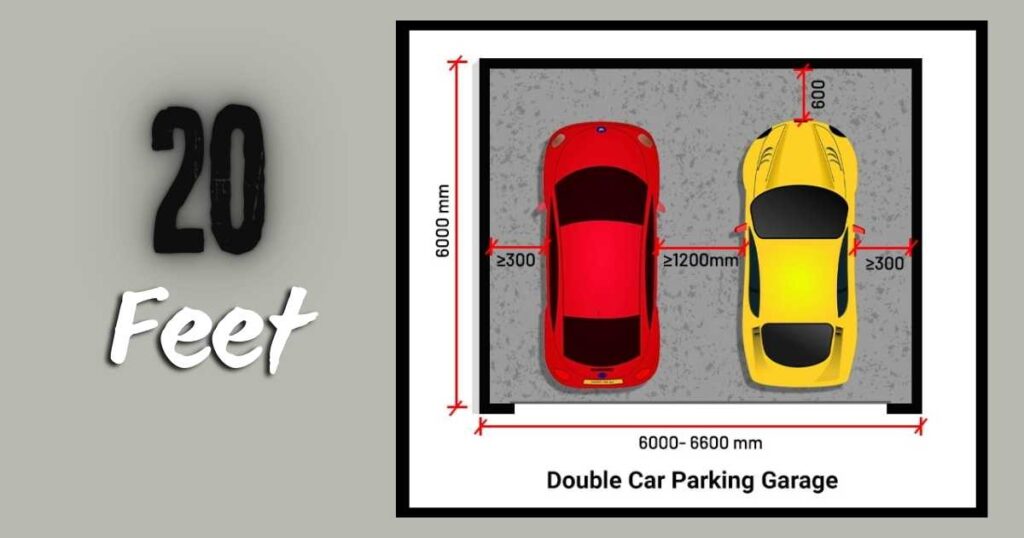
Modern sedans measure 15-18 feet, while SUVs push 18-20+ feet. Two car lengths parked bumper-to-bumper total 30-35 feet. But here’s better perspective.
Standard parking space length measures 18-20 feet by 8-9 feet wide. Picture one full-size SUV like a Chevy Tahoe (18.9 feet) plus a motorcycle (6-7 feet) for your 20-foot visualization.
By 2025, EV adoption hit 18% of new US car sales according to the American Trucking Association. Many EVs (Ioniq 5, ID.4, Model Y) cluster around 15-16 feet—perfect mental benchmarks for everyday size comparisons.
Understanding this helps with parallel parking estimates, driveway planning, and garage depth requirements. Typical garages run 20-24 feet deep to accommodate vehicles plus walking space.
FAQs About 20 Feet
How to Measure 20 Feet Without a Tape Measure?
Take eight normal walking steps (each roughly 2.5 feet). Use your body height three times, arm spans, or count standard floor tiles for accurate estimation.
How Long is 20 Feet in Comparison to a School Bus?
A full-size school bus measures 35-40 feet long. Twenty feet represents roughly half a school bus length—imagine the front section through the door.
What is a 20/20 Vision?
Twenty-twenty vision means seeing clearly at 20 feet what average people see at that distance. It’s normal visual acuity, not perfect vision necessarily though.
Conclusion
You’ve now got nine rock-solid references for visualizing 20 feet. From shipping containers transforming retail to pontoons filling lakes to delivery trucks navigating streets, these everyday objects 20 feet surround you constantly.
Next time someone mentions 20 ft measurement, you won’t guess blindly. Walk outside and pace eight strides. Notice what sits at that distance. That’s your new superpower—turning abstract numbers into instant recognition through length comparison 20 feet you’ll never forget.