Ever found yourself squinting at product dimensions online, trying to visualize whether something will actually fit? You’re definitely not alone. Understanding measurements without a ruler nearby can feel like solving a puzzle blindfolded.
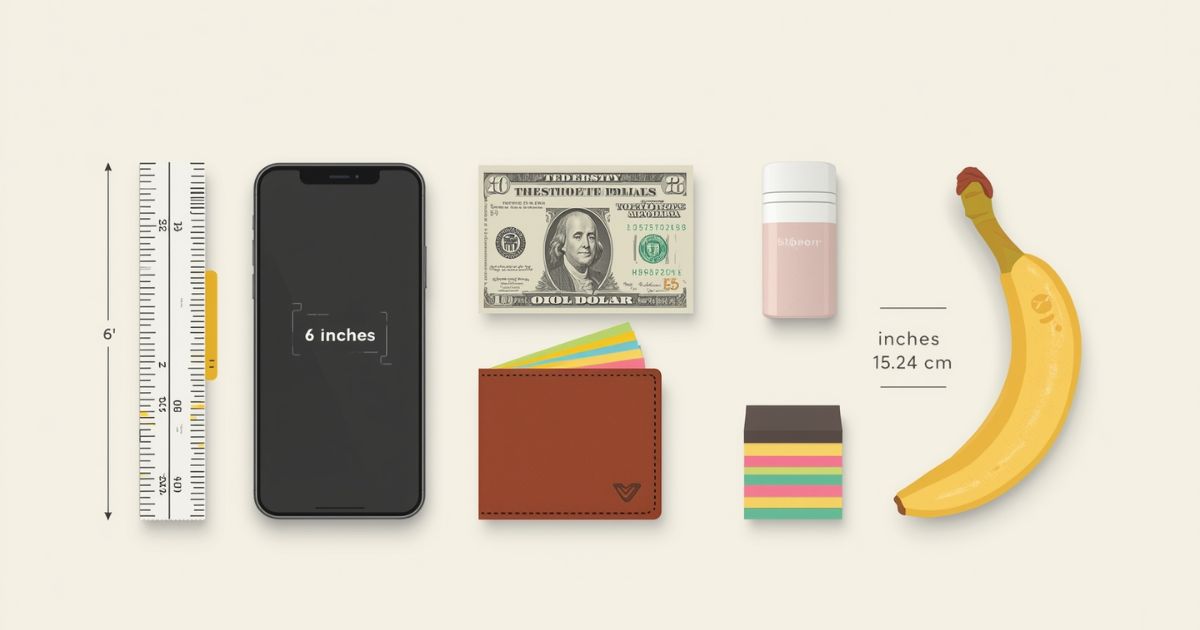
Here’s the thing: 6 inches appears everywhere in our daily lives. It’s half a foot, exactly 15.24 centimeters, or 152.4 millimeters if you prefer the metric system. This specific length pops up constantly—from your smartphone screen to items scattered around your house. Once you recognize these everyday objects, you’ll never struggle with quick measurements again.
Let’s dive into practical benchmarks that’ll transform how you estimate sizes forever.
How Long Is 6 Inches?
Six inches represents precisely half of a standard ruler. Think of it as the midpoint reference on that twelve-inch tool you used throughout school.
In the metric system, we’re talking 15.24 centimeters a conversion worth memorizing. The imperial and metric measurements both serve different purposes, but understanding their relationship makes life considerably easier. This length shows up in construction, crafts, cooking, and countless everyday tasks.
Why does this specific measurement matter so much? Because it strikes that perfect balance. Not too small to be insignificant. Not too large to be cumbersome. It’s the Goldilocks zone of measurements just right for portable items, compact gadgets, and countless household essentials.
Your hand likely spans somewhere between 6.5–7.5 inches from wrist to fingertip. Bodies provide our most ancient impromptu gauge system. Before standardized rulers existed, humans relied entirely on body parts for practical measurement tips.
How Big Is 6 Inches Compared To a Standard Ruler?
A standard ruler stretches exactly twelve inches total. Picture snapping that ruler perfectly in half. That’s your six-inch reference.
Most rulers display clear markings at the halfway point. You’ll notice the number “6” prominently featured, often with slightly longer tick marks than surrounding measurements. This visual comparison makes identifying six inches incredibly straightforward.
Rulers come in various materials wooden ones for classrooms, metal versions for workshops, and flexible plastic types for sewing projects. Regardless of material, the standardized measurements remain consistent. That’s the beauty of the imperial system’s predictability.
The midpoint serves as more than just a number. It’s your anchor for quick estimation when you don’t need laser precision. Furniture shopping? Home repairs? The ruler’s halfway mark becomes your mental reference point.
Now let’s explore objects you encounter constantly.
Things That Are 6 Inches Long
Dozens of everyday objects naturally measure around six inches. Some hit this mark precisely. Others come remarkably close. The slight variations rarely matter for practical benchmarks and size visualization.
Understanding these comparisons transforms random guessing into informed estimation. You’ll make smarter purchasing decisions online. DIY projects become less intimidating. Even packing suitcases gets easier when you mentally calculate dimensions.
Ready to discover your new favorite measurement reference tools?
Household Items That Are 6 Inches Long
1. Using Your Hand as a Measuring Tool
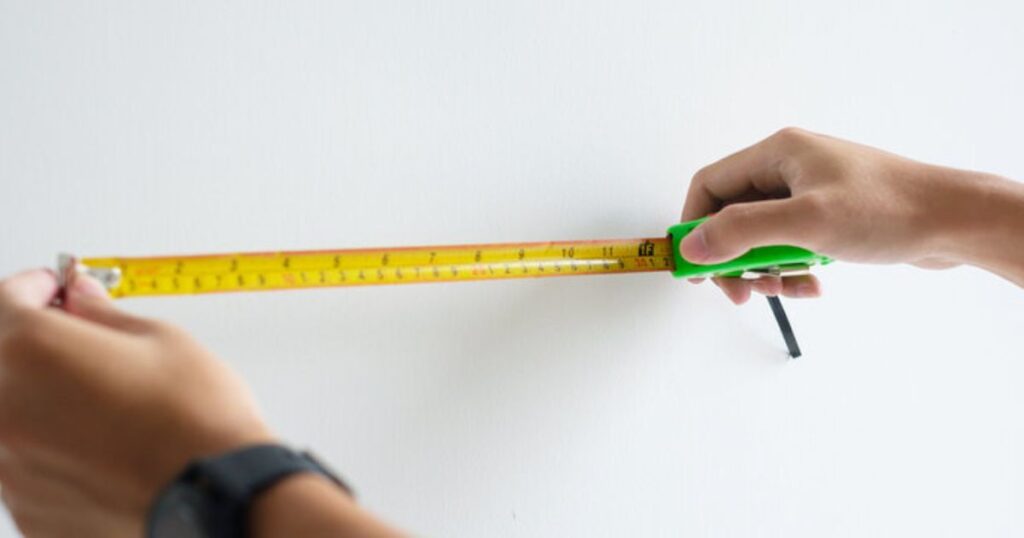
Your hand provides the ultimate portable measurement device. No batteries required. Never forgotten at home. Always available precisely when needed.
The average adult male hand measures 7–7.5 inches from wrist crease to middle fingertip. Female hands typically span 6.5–7 inches. Individual genetics create variation, but most adults fall within this range.
Here’s a fascinating detail: your distal phalanx (the fingertip section of your thumb) measures roughly 1/3 of an inch. Stack segments together, and you’ve created a surprisingly accurate impromptu gauge.
Calibration matters tremendously. Measure your personal hand span once against a known ruler. Commit that number to memory. Suddenly you’ve unlocked a superpower for quick measurement techniques anywhere, anytime.
| Hand Measurement | Average Male | Average Female |
|---|---|---|
| Wrist to fingertip | 7–7.5 inches | 6.5–7 inches |
| Palm width | 3.3 inches | 2.9 inches |
| Thumb length | 2.75 inches | 2.5 inches |
Use this technique when furniture shopping, estimating craft project measurements, or checking whether items fit specific spaces. Your hand becomes an extension of your problem-solving toolkit.
2. A US Dollar Bill
American currency offers shockingly precise dimensions. Every single bill whether a crisp new twenty or a worn-out five measures exactly 6.14 inches long and 2.61 inches wide.
The Bureau of Engraving and Printing maintains these standardized sizes across all denominations. Why? Vending machines, ATMs, and cash-counting equipment require consistency. A ten-dollar bill slides through machinery identically to a hundred-dollar bill.
This US dollar bill length makes it arguably the most accessible measurement tool. Who doesn’t carry cash occasionally? Even in our increasingly digital world, physical currency remains remarkably common.
Here’s the clever part: that extra 0.14 inches beyond six inches is negligible for most practical applications. When you need a quick reference, your wallet provides instant answers.
Pro tip: Dollar bills handle minor repairs and home improvement estimations beautifully. Measuring picture frame spacing? Estimating fabric lengths? Your money literally measures up.
3. Two Bank Cards
Credit cards follow the ISO/IEC 7810 ID-1 format internationally. Each card measures precisely 3.375 inches long and 2.125 inches wide. The International Organization for Standardization ensures global consistency.
Stack two cards end-to-end horizontally, and you’ve created a 6.75-inch reference. Alternatively, arrange them vertically for approximately 5.5 inches. Either configuration provides excellent object length comparison.
Why standardize card sizes globally? Because ATMs, payment terminals, and card readers operate worldwide. A card issued in Tokyo must work flawlessly in Toronto. Standardization eliminates compatibility nightmares.
Most people carry multiple cards debit cards, credit cards, driver’s licenses. Your wallet transforms into a measurement toolkit without any additional effort. These compact and portable objects never leave your side.
Use this handy measurement hack when shopping online. Smartphone dimensions confusing you? Compare them against your credit card dimensions mentally. Suddenly those abstract numbers become tangible realities.
4. The iPhone 16 Pro
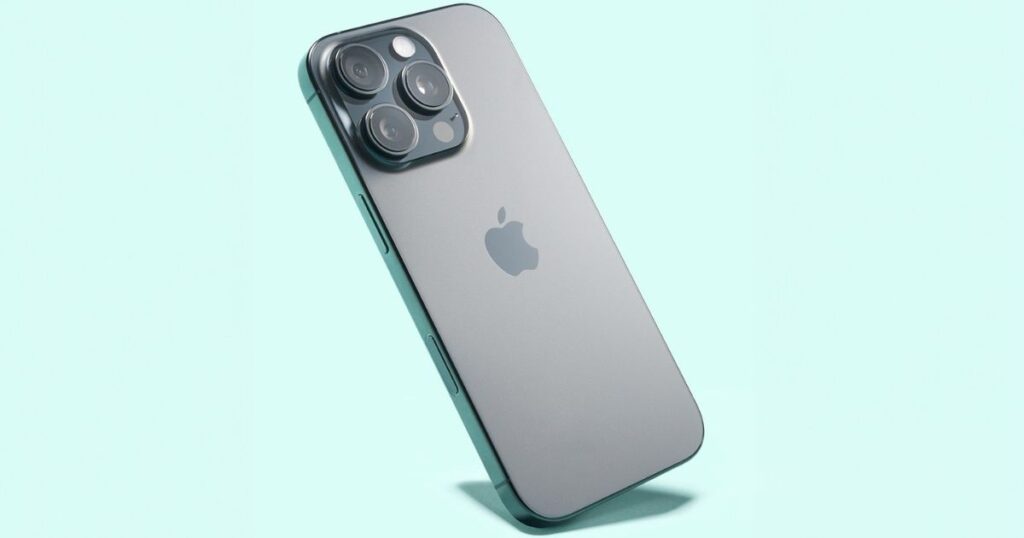
Apple’s latest flagship measures 5.89 inches tall incredibly close to our six-inch target. This iPhone 16 Pro dimensions specification comes directly from official Apple documentation.
Smartphones dominate modern life. Nearly everyone owns one. That ubiquity makes phones excellent everyday item dimensions references. Your device sits in your pocket or purse constantly, ready for instant size visualization.
The distinction between screen size and physical dimensions confuses many shoppers. The iPhone 16 Pro sports a 6.3-inch display measured diagonally. However, the actual device height the relevant measurement here stays under six inches.
Important note: Remove protective cases before using phones for measurements. Cases add thickness and length, skewing your estimates. The bare device provides accurate references.
Compare other compact gadgets against your iPhone. Shopping for a portable speaker? A travel wallet? Your phone creates immediate context for dimensions that otherwise feel abstract and meaningless.
5. Post-it Notes (Standard Size)
The classic sticky note measures 3 inches × 3 inches. Stack two notes vertically, and you’ve achieved your six-inch benchmark. These office items appear everywhere desks, refrigerators, bulletin boards, notebooks.
3M’s original design established dimensions that became industry standard. Sure, variations exist mini notes, large formats, super sticky versions. But that iconic yellow square remains instantly recognizable at three inches.
Office supplies measuring becomes effortless with Post-its. Need to estimate whiteboard dimensions? Craft project layouts? Quick desktop organization? These adhesive squares provide stackable items for measurement without any complicated calculations.
The beauty lies in availability. Schools stock them. Businesses order them by the case. Home offices keep stashes in drawers. You’re never more than arm’s length from this practical benchmark.
6. Half of a Standard Ruler
This seems almost comically obvious, right? Yet it bears mentioning because ruler alternatives sometimes come from broken or cut rulers.
That snapped ruler from your junk drawer? If it broke at the six-inch mark, you’ve got a perfectly functional measurement tool. The markings remain accurate. The length conversion capabilities stay intact. Functionality continues despite cosmetic damage.
Many people intentionally cut rulers for portable convenience. A six-inch ruler segment fits pencil cases, toolboxes, and purses more easily than full twelve-inchers. Sometimes less truly becomes more.
7. A Men’s Wallet
Traditional bi-fold wallets measure approximately 6 inches when folded closed. This men’s wallet dimensions standard evolved around pocket compatibility and currency accommodation.
Tri-fold wallets typically measure slightly smaller, around 5.5 inches. Slim wallets and minimalist designs vary considerably sometimes as compact as 4 inches. Style choices directly impact dimensions.
Leather wallets differ from synthetic materials. Stitching adds thickness. RFID-blocking layers contribute bulk. Yet the fundamental length remains surprisingly consistent across mainstream designs.
Your wallet represents another always-available reference. Shopping for phone cases? Comparing tablet dimensions? That folded rectangle in your back pocket provides instant context.
8. A Toothbrush
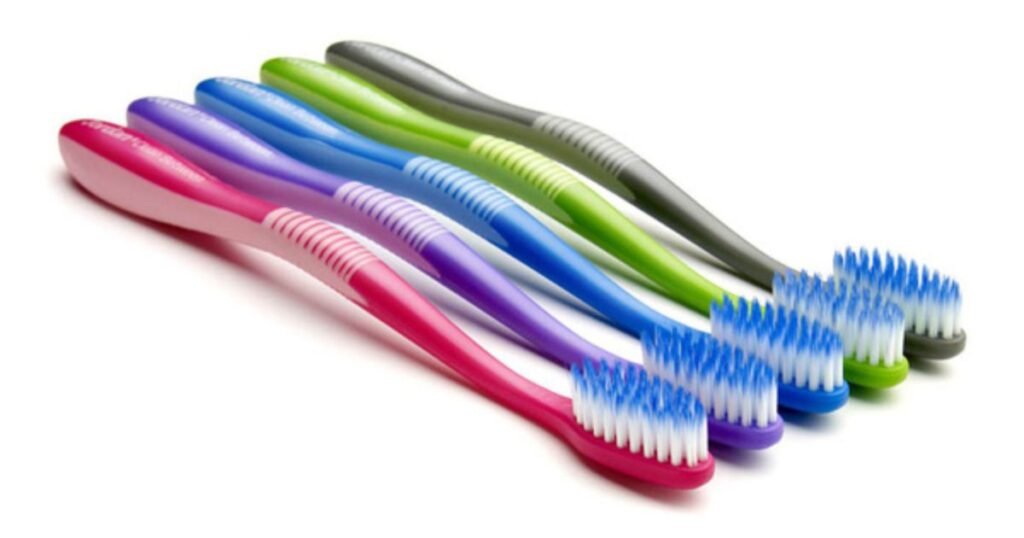
Standard adult toothbrushes measure between 7–7.3 inches total length. A Colgate toothbrush, for example, typically hits 7.3 inches from handle end to bristle tip.
Break down the components: the bristle head spans roughly 1 inch, while the handle stretches approximately 6–6.3 inches. That handle portion alone approaches our target measurement beautifully.
Electric toothbrushes differ significantly. Their motorized handles create bulkier designs. Travel toothbrushes often fold for compact portability. But standard manual brushes maintain remarkable consistency.
This household item lives in every bathroom. Morning and evening, you grasp a six-inch reference without realizing it. That’s the magic of understanding everyday object dimensions turning the mundane into the useful.
9. Small Paperback Book
Mass-market paperbacks those affordable novels in grocery store checkout lines typically measure 6.75 inches tall and 4.25 inches wide. Publishing industry standards created these dimensions decades ago.
Why this specific small paperback book size? Economics and portability. Smaller formats reduce printing costs. They fit pockets and purses easily. Commuters appreciate reading materials that don’t require two hands.
Compare this to trade paperbacks, which measure around 8–9 inches tall. Or hardcovers, which vary wildly. Mass-market paperbacks maintain the tightest dimensional consistency.
Use books for size reference when organizing shelves, planning bag purchases, or estimating space requirements. Literature becomes functional beyond mere entertainment.
10. A Screwdriver Handle
Standard screwdriver handles measure 3–8 inches depending on the tool’s purpose. Most homeowner-grade screwdrivers cluster around 5–6 inches for ergonomic balance.
The handle length affects torque application and user comfort. Too short creates hand fatigue. Too long reduces precision. Manufacturers landed on six inches through decades of ergonomic design refinement.
Precision screwdrivers for electronics measure considerably shorter sometimes just 3–4 inches. Long-reach specialty tools extend beyond eight inches. But your standard Phillips or flathead? Solidly six-inch territory.
Workshop organization benefits from understanding tool dimensions. Storage drawers, toolbox layouts, pegboard arrangements all improve when you accurately estimate home improvement tools sizing.
11. A Door Handle
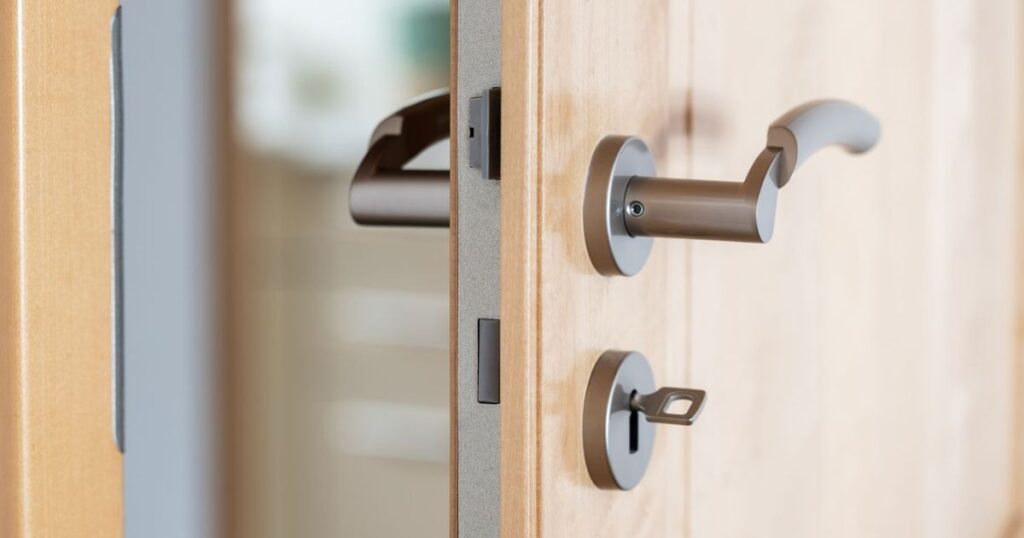
Lever-style door handles typically project 4–6 inches from the door surface. This door handle length balances accessibility requirements with hallway safety concerns.
Round doorknobs measure differently about 2–3 inches diameter. Modern building codes increasingly favor lever handles for disability access. The Americans with Disabilities Act influences these design standards significantly.
Interior handles often differ from exterior ones. Security concerns, weather resistance, and aesthetic preferences create variations. Yet that four-to-six-inch range dominates residential construction.
Measuring existing handles before replacement shopping saves tremendous frustration. Knowing typical dimensions prevents purchasing incompatible hardware.
12. A Small-Sized Banana
Nature provides our most organic reference. Small bananas measure 6–7 inches from stem to tip. Medium ones stretch 7–8 inches. Large bananas exceed 8 inches easily.
The Cavendish variety what you’ll find in American grocery stores shows remarkable consistency. Baby bananas (Niño variety) measure considerably smaller. Plantains grow much larger, sometimes reaching 12 inches.
Curvature complicates direct measurement. Measuring along the banana’s curve versus straight-line distance creates discrepancies. For quick estimation, either method works adequately.
This small banana size offers a delicious, nutritious measurement reference. Literally every grocery trip puts this tool in your shopping cart.
13. Two Baseballs
A regulation baseball measures 2.86–2.94 inches in diameter according to Major League Baseball specifications. Stack two balls, and you’ve created approximately 5.8 inches height remarkably close to six inches.
Baseball’s 176 years of history established incredibly tight manufacturing standards. The cork and rubber core, yarn windings, and leather cover all follow precise specifications. Consistency matters tremendously for fair gameplay.
Place two baseballs end-to-end rather than stacking them vertically, and you’re looking at roughly 6 inches of spherical reference. America’s pastime provides practical measurement applications beyond entertainment.
Sports equipment offers surprising utility for size visualization. Display cases, memorabilia storage, and collection organization all benefit from understanding these standard dimensions.
Final Thoughts
Understanding six inches through everyday objects simplifies countless daily decisions. You’ve just discovered thirteen reliable references, each offering unique advantages depending on your situation.
Your hand provides the most immediate quick measurement tool. Your wallet and phone never leave your side. Office supplies surround you at work. Sports equipment and household items fill your home. Together, these objects create a comprehensive measurement reference system.
The real power emerges when you internalize these comparisons. Online shopping becomes less stressful. Home improvement projects feel more manageable. Even packing suitcases efficiently improves when you visualize dimensions accurately.
Start building your mental catalog today. Measure your hand span. Stack those credit cards. Compare your phone against a ruler once. These small actions create lasting knowledge that serves you repeatedly.
What’s your go-to measurement hack? Drop a comment sharing your favorite technique. Bookmark this guide for future reference. And remember mastering practical benchmarks starts with recognizing the ordinary objects already surrounding you.
Six inches isn’t just a number. It’s a doorway to better spatial reasoning and smarter decision-making in your everyday life.