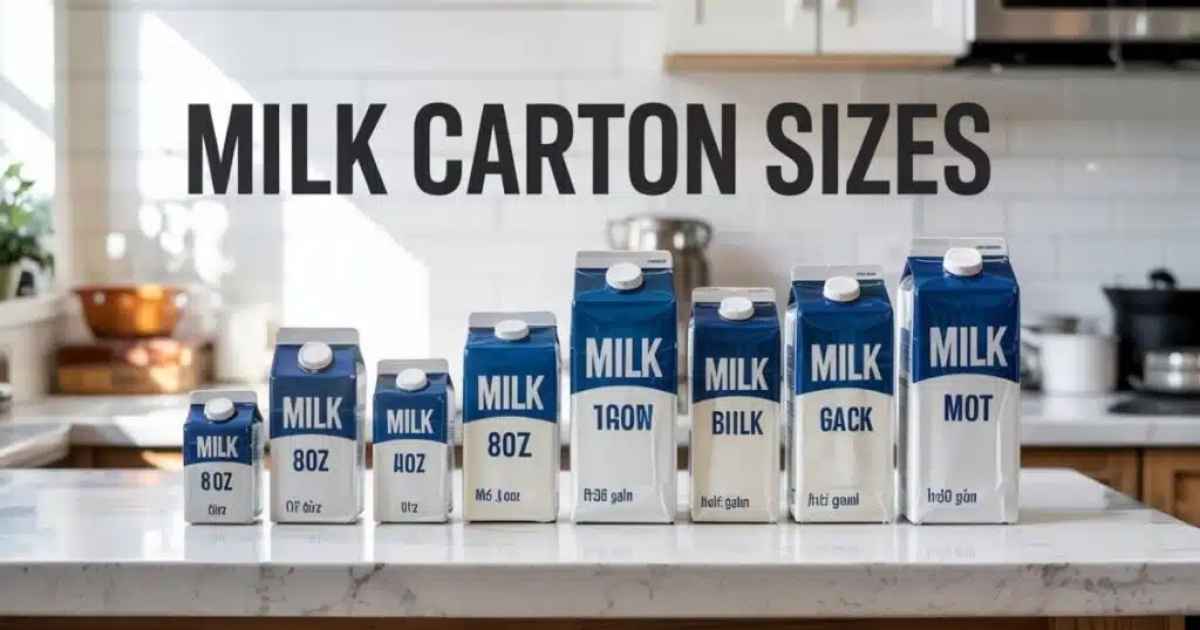
Ever grabbed the wrong milk size at the store and regretted it halfway through the week? Standard milk cartons range from tiny 8 oz school boxes to massive 128 oz gallon jugs, and picking the right one saves money and fridge space.
Most homes use quart cartons (32 oz), half-gallon cartons (64 oz), or gallon milk jugs (128 oz) because they balance price and freshness perfectly.
How Big Are Standard Milk Cartons?
Milk carton sizes start at 8 ounces for kids and go up to a full gallon that weighs over 8 pounds when full. The dairy aisle packaging you see follows a simple pattern: 8 oz, 16 oz (pint), 32 oz (quart), 64 oz (half-gallon), and 128 oz (gallon). These milk carton dimensions fit standard refrigerator door shelf sizes because manufacturers design them together.
Walk into any grocery store and you will notice milk container types come in paper or plastic. Paper milk cartons with that peaked roof (called a gable-top carton) dominate smaller sizes. Plastic milk jugs with handles take over once you hit the half-gallon mark because they are easier to pour without spilling everywhere.
The Evolution of Milk Packaging
People used to carry metal pails to dairy farms and fill their own containers, which sounds romantic until you think about bacteria. Cities grew bigger and suddenly everyone needed safer ways to get milk from farm to table.
Glass bottles showed up first, then paper changed everything in the 1930s when someone realized cardboard could keep milk fresh without all that heavy glass.
From Glass Bottles to Paper Cartons
The milkman delivered reusable glass bottles to doorsteps every morning, and families left empties out for collection. This system worked great but required an army of delivery drivers and constant bottle washing at the dairy. John Van Wormer invented the Pure-Pak carton in 1915, though it took decades before dairies fully switched over from glass.
Historical milk delivery systems kept glass around until the 1950s when paper finally won because it cost less to ship. One truckload of flat paper cartons replaced what needed multiple trips with heavy glass bottles. The milk packaging history shows how economics and convenience always beat nostalgia in the end.
Common Milk Carton Sizes and Their Uses
School Milk Cartons (8 oz / 236 ml)
That 8 oz milk carton from cafeteria lunch is exactly one cup, which matches what nutritionists recommend for kids per meal. School milk cartons measure about 3.75 inches tall and 2.25 inches wide, small enough for little hands but tricky to open without squirting milk everywhere.
Schools buy these by the thousands because the size prevents waste and the milk carton measurements stack perfectly in coolers.
Pint Cartons (16 oz / 473 ml)
The 16 oz pint carton holds two cups and works perfectly for recipes that call for specific amounts. Coffee shops love pints because baristas can finish one before it goes bad, unlike cracking open a whole gallon. You will find specialty items like heavy cream or buttermilk in this size since people use them slowly.
Quart Cartons (32 oz / 946 ml)
A 32 oz quart container gives you four cups and fits nicely on most fridge door shelves without hogging space. This quart milk carton became popular when home refrigerators first appeared because the dimensions matched those early shelf designs.
Singles or couples who drink milk casually buy quarts to avoid waste, and the price per ounce beats buying two pints.
Half-Gallon Cartons (64 oz / 1.89 L)
The 64 oz half-gallon size is what most families grab because it lasts about a week without going sour. Half-gallon cartons come in both paper and plastic, though plastic versions with handles outsell paper ones thanks to easier pouring.
This size hits the sweet spot where you save money buying bigger but do not risk throwing out spoiled milk.
Gallon Containers (128 oz / 3.78 L)
A 128 oz gallon container gives you 16 cups of milk and costs way less per ounce than smaller sizes. The gallon milk jug almost always comes in plastic now because paper cannot handle the milk container weight when full (over 8 pounds).
That built-in milk jug handle design makes pouring manageable, though you still need two hands when it is brand new and heavy.
Regional and International Variations
European Milk Packaging
European milk cartons come in 1-liter and 2-liter sizes instead of quarts and half-gallons because they use the metric system. UHT milk packaging dominates Europe since shelf-stable boxes do not need refrigeration until opened, perfect for smaller European fridges.
These aseptic milk cartons can sit in the pantry for months, which changes how people shop (less frequent trips, more bulk buying).
Asian Milk Packaging
Asian milk packaging often uses small plastic pouches or single-serve bottles because apartments have tiny refrigerators. Japan pioneered some wild designs, including triangular cartons that supposedly taste better (marketing claims are creative everywhere).
South Korea experiments with unique shapes that prevent stacking so milk gets used faster instead of hiding in the back of the fridge.
The Science Behind Milk Carton Design
Materials Science
Modern milk carton design layers paperboard with polyethylene-coated cartons that block light and oxygen from spoiling the milk. The food-safe packaging materials include multiple thin layers, each doing a specific job like preventing leaks or keeping out bacteria. Ultra-pasteurized milk containers add aluminum foil layers for complete light blocking, extending UHT milk storage to months instead of weeks.
Materials science in packaging gets complex fast, but the goal stays simple: keep milk fresh from dairy to your cereal bowl. That waxy feeling on paper cartons comes from polyethylene, the same plastic in grocery bags, just way thinner. Milk packaging materials balance cost, safety, and environmental impact, though no perfect solution exists yet.
Ergonomics and User Experience
The ridge on plastic jugs makes pouring smoother by directing the stream instead of letting milk glug out everywhere. Milk container ergonomics matter more than you think because a poorly designed jug means spills, and spills mean angry customers.
Milk carton opening mechanisms evolved from “stab it with a knife” to pull tabs and screw caps after too many people complained.
Read More: Coke Can Dimensions: Sizes, Heights & Measurements
Environmental Considerations
Recyclable milk cartons sound great until you learn many recycling plants cannot separate the paper from the plastic coating. Plastic milk jugs recycle easier technically, but most still end up in landfills because people forget or do not care. The milk carton environmental footprint includes manufacturing, shipping weight, and what happens after you finish the milk.
Sustainable dairy packaging means balancing different problems: paper uses trees, plastic uses oil, and glass needs tons of energy to recycle. Some returnable glass milk bottles programs are making a comeback through local dairies and subscription delivery services. Compostable milk packaging exists now using plant-based plastics, though it costs more and only breaks down in industrial facilities.
Practical Applications of Understanding Milk Carton Sizes
Kitchen Conversion Tips
An 8 oz milk carton equals exactly 1 cup, making school milk boxes handy measuring tools in a pinch. Kitchen measurement equivalents get easier when you remember a quart is 4 cups and a gallon is 16 cups.
Milk carton volume conversions help when recipes list ounces but you think in cups (or the other way around).
Storage Optimization
Milk storage tips start with understanding which containers fit where in your specific refrigerator model. Door shelves handle quarts and half-gallons perfectly, but gallon containers need main shelf space.
Refrigerator storage for milk works best on lower shelves where temperature stays coldest, not in the door despite those convenient slots.
Budget Considerations
Buying bigger always costs less per ounce, but only if you drink it before expiration. Dairy industry innovations keep pushing shelf life longer, but regular milk still goes bad in about a week after opening.
Calculate your actual usage before assuming the gallon saves money, you might waste more than you save.
Future Trends in Milk Packaging
Future of milk packaging includes smart labels that change color when milk spoils, ending the sniff test forever. Concentrated milk products could shrink shipping costs and packaging waste by letting you add water at home. Some startups test milk packaging innovations like edible containers or seaweed-based boxes that dissolve completely.
Subscription services bring back the milkman concept with returnable glass milk bottles delivered weekly to your door. Technology enables tracking every bottle through QR codes, ensuring proper sanitization and reuse cycles. Consumer convenience packaging keeps evolving as people want both eco-friendly options and zero-hassle shopping.
FAQs
What is the most common milk carton size for families?
Half-gallon cartons (64 oz) are most popular because they balance affordability with freshness for typical households.
Why do gallon milk jugs have that weird square design?
The square shape stacks efficiently during shipping and maximizes refrigerator shelf space compared to round bottles.
How much milk is in a carton at school?
School milk cartons contain exactly 8 ounces (236 ml), which equals one cup serving for children.
How much does a milk carton weigh?
An 8 oz school carton weighs about half a pound, while full gallons weigh approximately 8.6 pounds.
How many ounces in a school milk carton?
School milk cartons hold 8 fluid ounces, the standard single serving size recommended for kids’ meals.
Conclusion
Understanding milk carton sizes helps you shop smarter, waste less, and always grab the right amount. Start with your household’s weekly usage, then pick the size that gets finished before spoiling.
Next grocery run, you will breeze past that dairy aisle instead of standing there doing mental math while blocking other shoppers.